How Jesus Deconstructed Religious Expectations, and What
Hebrews 10 & Matthew 13:12 Say About Receiving More
By: Daniel S. and Brian P. | 4 min read
(Disclaimer: On this blog, I may feature a select number of partners and companies that have products that can help my audience. If you happen to make a purchase through my partner affiliate links, I may earn a commission from them, at no extra cost to you).
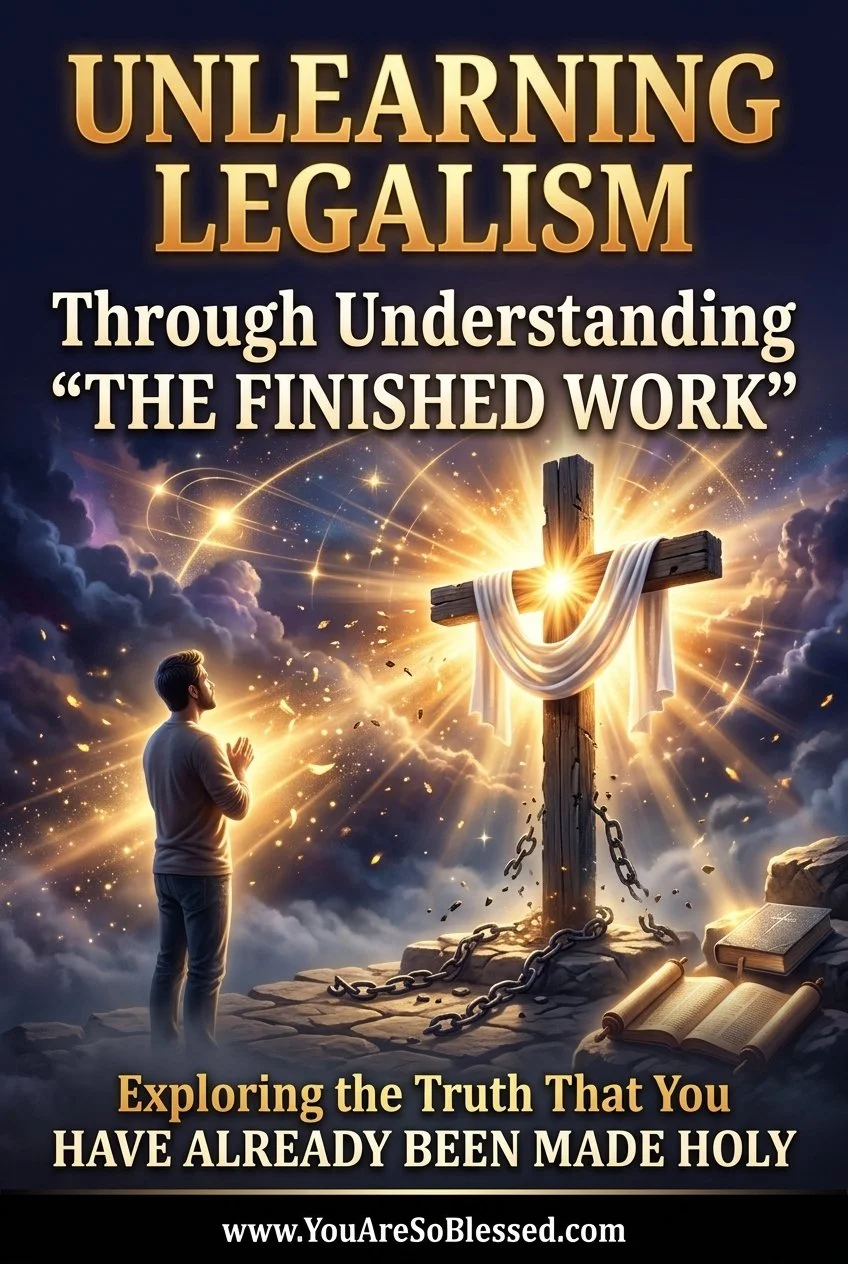
Image created with Gemini
When the Old Framework Has to Be Taken Apart
In the last post (read it here), we talked about wineskins and how a mind has to expand before it can hold new revelation. But expansion often begins with something less comfortable: taking apart what we’ve been taught.
That word, deconstruction, might make many believers a bit nervous. It can sound like it’s referring to tearing down one’s faith. However, if you look at how Jesus lived, you’ll see that deconstruction isn’t the opposite of faith. When Jesus brought a message that challenged the religious expectations of His day, He was helping people unlearn what they had inherited so that their hearts could be re-aligned with the Father.
If Jesus did that, it shouldn’t surprise us that the process of deconstruction is still relevant, and even necessary, today. It sets a precedent, and it shows that challenging a way of thinking is not the same as being led astray, so one doesn’t always have to resort to a fear of being deceived. At some point, we need to trust God can lead us beyond things we’ve been taught.
The Voice in the Background
Here’s a question worth asking honestly: When I picture God looking at me, what do I feel?
For many of us, the answer carries an old script. God is a score-keeping judge, waiting for us to mess up. Holiness is something we have to earn. Acceptance is something we have to maintain. We may not say any of that out loud, and we may even preach the opposite, but it hums underneath, in the subconscious. Reflect for a moment on the above examples. Nearly everyone has felt this way and it appears most still do. This is what God wants to change.
That old script is what we mean by legalism: the belief that standing with God depends on what we do. It’s a heavy way to live. It leads to exhaustion, comparison, and fear. It is very hard to see because it feels like devotion for the person embodying it and from the outside, legalism appears as righteousness to undiscerning people.
Unlearning it takes more than willpower. It takes renewing the mind, and for many people it takes a new look at what Jesus actually finished.
Made Holy: Once and for All
One of the most freeing passages in the New Testament is in Hebrews 10. It says that by God’s will, “we have been made holy through the sacrifice of the body of Jesus Christ once for all” (Hebrews 10:10).
Read the next verses in context. Every priest in the old system stood day after day, offering the same sacrifices again and again, which could never take away sins, but Jesus offered one sacrifice for sins for all time. He then sat down at the right hand of God. By that single offering, He has made perfect forever those who are being made holy (Hebrews 10:11–14).
Notice the verb tense. We have been made holy. It’s done. The priests stood because their work was never finished. Jesus sat down because His work was finished.
That raises an honest question: why are we trying to become holy when the Word says He already made us holy? (Isn’t this a seriously good question?!)
This doesn’t mean we stop doing good. We should. But we don’t do good in order to be accepted. We do it because we’re already accepted. Holiness in this light is not a status we earn. It’s a state we receive, and then live in, and from.
If this feels bold, try saying it quietly to yourself: “I have been made holy.” Some of us find that this sounds like blasphemy at first because we’ve been taught to say the opposite, but it’s what the Scripture says, and the “once for all” is the whole point. We have already been made holy! Period. Praise God!
The Cost of a Closed Heart
If the Finished Work is such Good News, why don’t more people feel its freedom? Part of the answer comes from a short and surprising verse.
In Matthew 13:12, Jesus says, in the Amplified Bible’s wording, that whoever has spiritual knowledge will be given more and furnished richly, “but from him who has not spiritual knowledge, even what he has will be taken away.”
Jesus said this right after explaining why He taught in parables. The pattern is what we might call the law of receptivity:
The open heart is willing to listen, curious, and receptive to spiritual truth. It is a candidate for deeper understanding.
The closed heart puts its walls up the moment something unfamiliar appears. It decides “that’s not of God” before it has even thought about it. Over time, even the small capacity it began with can fade.
Think of it as the size of the cup you’re willing to hold. Some people hold up a small espresso cup. God has a huge pitcher to pour, but if the cup stays small, He can’t pour more without breaking the vessel.
We even see a real-life example. In Nazareth, Jesus couldn’t do many miracles because of the people’s unbelief (Matthew 13:58). Faith isn’t a magic formula, but receptivity matters. God invites our cooperation and cooperation begins with a willingness to believe.

Learn the Science Behind How-to Sit Still & Enter into the Spirit,
so You Can Experience God
This Premium E-Book will teach you what you need to know about Christ-centered Meditation
& how to hear God through Stillness. This Spiritual Practice Will Surely Transform your Relationship with GOD! Learn More Here
Curiosity Is Not the Enemy
Notice what the law of receptivity does not say. It doesn’t say the open heart accepts everything without thinking. It says the open heart is willing to learn.
There’s a way of holding new ideas that is both careful and curious. You look at the Scriptures. You ask the Holy Spirit. You take your time, but you don’t let fear make the decision for you. Like a child, you stay in awe and wonder about God because you trust that He is not out to trick you or deceive you.
As we’ll see in a later post, discernment and fear are not the same thing, and learning to tell them apart is a spiritual discipline we can all learn.
What This Means for You
Deconstruction isn’t the end of faith. Taking apart an old framework can be the first step toward a stronger one. Jesus Himself did it.
Listen for the old script. If you hear “God is waiting for me to fail,” ask where you learned it, and whether it sounds like Jesus.
Rest in the “once for all.” The priests stood because the work was never done. Jesus sat down because it is. You can stop striving to complete what He has already finished.
Stay open. Ask the Holy Spirit to help you keep your heart receptive, and you’ll find there is always more. Also be willing to keep an open heart.
A question to reflect on this week: Where am I still trying to earn something that Jesus already finished for me?
In the next post, we’ll look at what happens when old certainties no longer satisfy and you feel suspended between seasons, which we call the Holy Shift freefall.
Ready to go deeper?
If your heart is hungry for the deeper things of God, you don’t have to walk this out alone. Inner Dimensions is our private community for believers who are awakening to the Kingdom Age. Together we learn, practice, and grow in the finished work, live, alongside like-minded believers. Members also receive the Awakening to the Kingdom Age E-book and Video Course bundle for FREE.
A gentle note: Inner Dimensions is for people who are truly open-hearted and unafraid of exploring more of God. If that’s you, [click here to learn more and join]. If you’re not sure the community is for you, or you’re not quite ready, that’s perfectly okay.
You can still explore this teaching at your own pace:
[The Bundle (E-book + Video Course)], available at a discounted price compared to buying each separately
These courses were made at the leading of prompting of Holy Spirit, for your spiritual growth. We are honored to be of service to you in this capacity.
You can have as much of God as you want. It’s all up to your desire, love of God, and willingness to be open, believing there is more. This is a great secret we’re sharing with you, from personal experience. It will most definitely work for you too!